𝗗𝗨𝗥𝗕𝗔𝗡’𝗦 𝗗𝗢𝗖𝗞𝗦𝗜𝗗𝗘 𝗗𝗜𝗩𝗔, 𝗡𝗢𝗪 𝗙𝗢𝗥𝗚𝗢𝗧𝗧𝗘𝗡
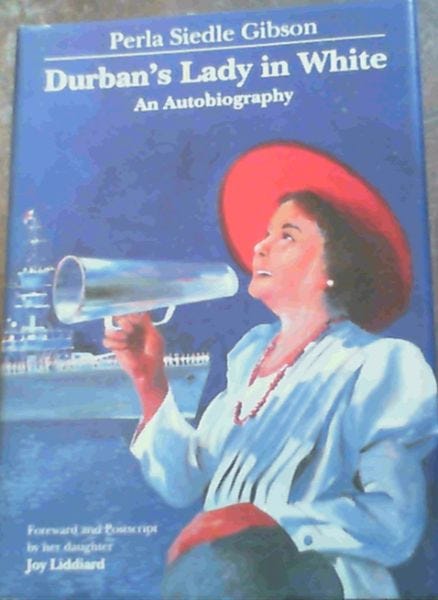
Who was Durban’s own Vera Lynn known as The Lady in White?

During WWII, there was a soprano who volunteered to sing to countless warships from Durban harbour. From her home on a hill in Berea overlooking Durban harbour, she could see the steam rising from the warships as they slowly docked or prepared to depart. She would immediately walk to her Buick sedan and drive down to the quay.
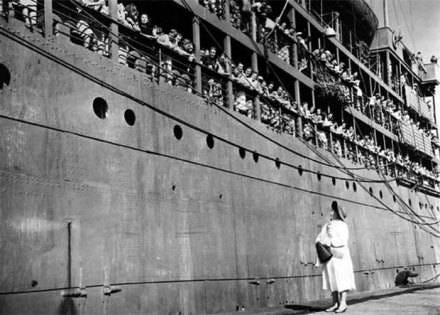
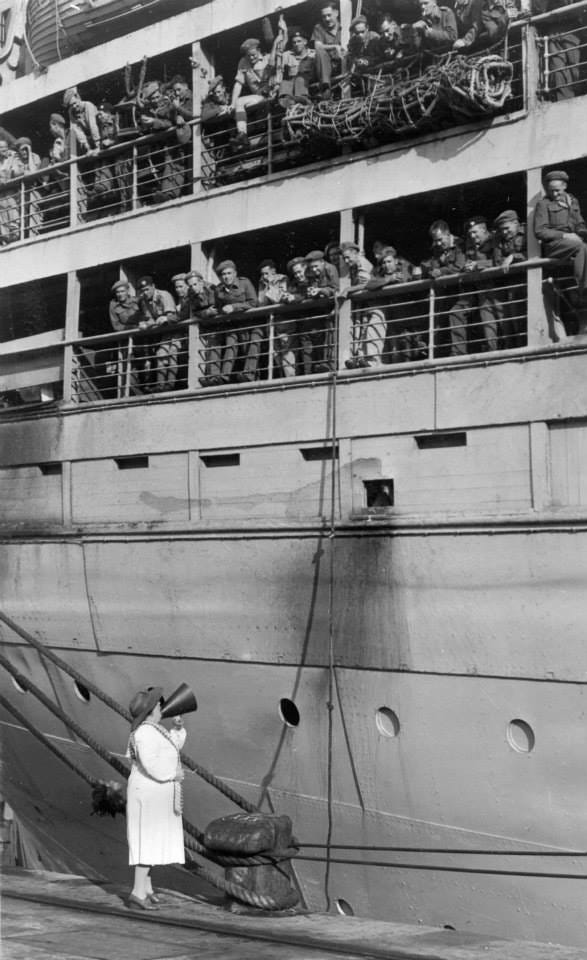
There, in her trademark white dress, red hat and red necklace, a kind of uniform visible from afar, Perla Siedle Gibson, a soprano, would stand and sing at the top of her voice through a megaphone to the soldiers aboard the ships.
It lifted the morale of hordes of weary troops. Many of the young men, longing for home, must have seen something of their mothers in her.
It was a bittersweet reminder of their homeland, of better days ahead, of returning to a family waiting for them, with the fragile hope that the war would one day end. She was in her early fifties when she began, and she forged an emotional connection with these people from across the world.
She became known as The Lady in White. Even Time, Life, and numerous other international publications, from India to Canada, reported on her. Between April 1940 and August 1945, she sang for more than 5,000 ships and approximately a quarter of a million soldiers.
Durban was a busy and popular port for transit ships en route to North Africa and East Asia. With every warship entering or leaving the harbour, she was there, standing alone on the northern pier, her rich voice echoing across the water.
She stood there at first light in the morning, again at dusk, in wind, rain, or blazing sun. Perla never missed a convoy. Not even the one that departed on the day she learnt that her eldest son had been shot dead in skirmishes in Italy. Her heart broken, but she sang.
On 15 November 1943, an article appeared in Time, noting that she used a megaphone that carried her strong, Wagnerian voice far across the water. One soldier recalled:
“Gradually the troopship drew away and at the end of the jetty that white-clad figure started Auld Lang Syne. As the gap grew, just snatches of the words came to us, and finally, just a picture of that solitary figure in white waving to us, and we swear she was still singing. We might forget many things of this war, but never the songs of Durban’s Lady in White.”
She had a wide repertoire. For the Americans, she sang God Bless America and The Star-Spangled Banner. The British loved There’ll Always Be an England. Australians were fond of Waltzing Matilda. South Africans wanted to hear Sarie Marais. Greeks and Poles, meanwhile, were passionate about opera arias.
How did it all begin? A young soldier from Ireland once stayed overnight with her and her family. She cooked a hearty stew of mutton, potatoes, onions and parsley, Irish fare.
They listened together to Irish songs on an old wind-up gramophone. The next day, he had to leave.
As his ship departed the harbour, he shouted to her to please sing something. Using her hands as a makeshift amplifier, she sang When Irish Eyes Are Smiling. He waved at her until he disappeared over the horizon.
The emotional impact on both the young man, the crew, and on her herself was so powerful that she decided she would sing for every warship. Soon, soldiers from all over the world began talking about her.
Ship captains saluted her as they passed, and crews waved and whistled. The Czechs and Poles even clicked their heels specially for her and stood to attention.
She sang even longer for hospital ships, once for six hours straight for a British vessel. Large parts of Durban could hear her when ships anchored in the harbour, because the booming voices of soldiers singing along with her echoed through the streets.
She would begin by calling aloud, with echoing “coo-ees”, to which the soldiers would thunder back. Then came the first song, always the same, Land of Hope and Glory.
Her emotions were so raw and sincere that the men could feel them across the water. She, in turn, felt as though each one was her own child. They sent her letters and mementoes from places like New York, London, Mumbai (Bombay), Cairo and Singapore.
Later, a statue was erected in her honour, and when the British singer Vera Lynn visited South Africa after the war, she made a point of seeking her out. Lynn, too, was known for singing to soldiers.
When the war ended, she did not retreat into domestic quiet. In 1948, when the National Party came to power, she actively protested against apartheid and made her voice heard.
Perla Siedle Gibson died in 1971, just before her 83rd birthday. It is a pity that she has largely been forgotten today.
Perhaps you have to be philosophical about oblivion and glory, and think as Marcus Aurelius did. Lives pass, one after another, each stepping briefly into the light before fading again. What we call fame is only a slightly brighter version of that same brief moment, before the stage is cleared for someone else.
Quite so.
Oh I loved reading this story about Durban's Lady in White. Both of my grandfather's fought in WWII, I wonder if they ever heard her sing? There is so much of South African History that we were never taught in school!! This was really inspiring!
Thanks for sharing hope!
Loved that! Such a beautiful story!