𝗚𝗘𝗥𝗜𝗔𝗧𝗥𝗜𝗖 𝗥𝗢𝗖𝗞𝗘𝗥𝗦, 𝗦𝗪𝗘𝗘𝗧 𝗪𝗜𝗡𝗘 𝗔𝗡𝗗 𝗧𝗛𝗘 𝗥𝗘𝗟𝗘𝗡𝗧𝗟𝗘𝗦𝗦 𝗕𝗢𝗥𝗘𝗗𝗢𝗠 𝗢𝗙 𝗧𝗛𝗘 𝗦𝗘𝗩𝗘𝗡𝗧𝗜𝗘𝗦
Back in the early seventies, Sea Point’s old hotels were mausoleums of boredom and faint rebellion.

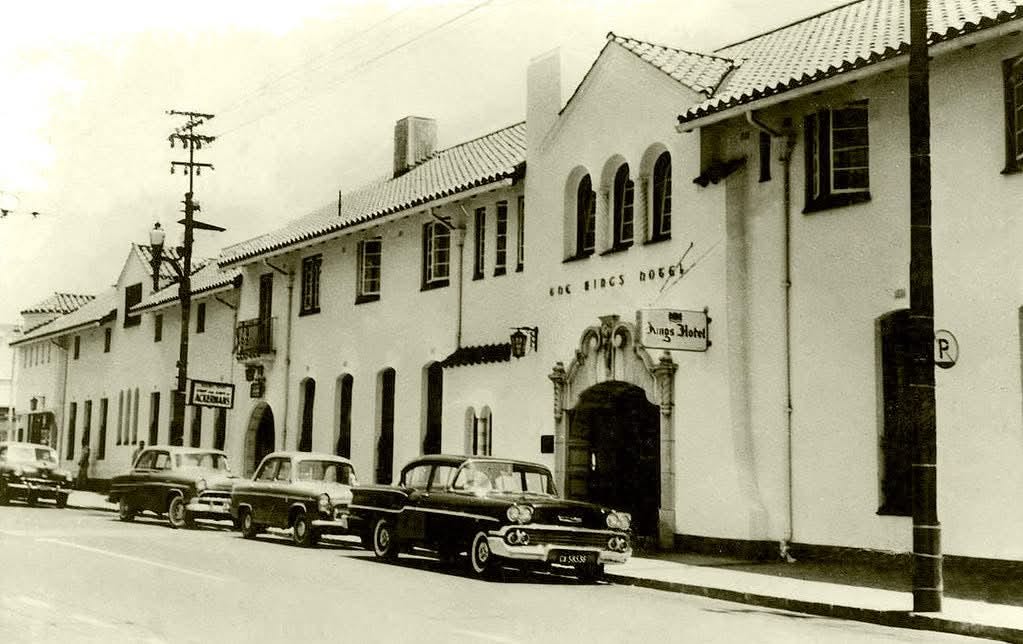
If you look, you’ll spot a picture of the old King’s Hotel in Sea Point, Cape Town. I saw it somewhere on Facebook and it brought back memories. Judging by the cars, the photo is from the 1950s.
I remember the place from the early seventies, when I was small and up to mischief. Sea Point was littered with old hotels back then: the Elizabeth on the beachfront, the Surfcrest in Bantry Bay, the Ocean View near the promenade, and the Bay Beach in Mouille Point.
Each one its own little mausoleum of gloom. Some people actually lived in these hotels; they were happy there.
I tell you this because I want younger people to understand the puritanical chokehold of the NG Kerk and National Party at the time. Everything dead-bolted at 1 p.m. on Saturdays. Closed, the whole shebang padlocked.
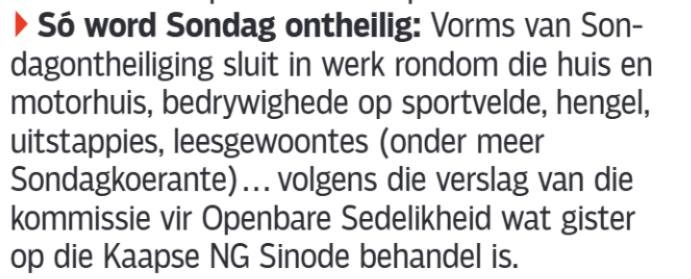
Sundays were a hostage situation. No booze, no films, nothing. The Bible said rest, so you bloody well rested. The streets looked like a neutron bomb had gone off. By late Sunday afternoon it was Dante’s Inferno of boredom.
I read, listened to Springbok Radio, I sat at the pavilion, and when that grew stale, I would knock on doors and ask for Mr Smith. There was no Mr Smith of course. I was just a pint-sized agent of chaos.
If adults fancied a glass of wine, they had to scuttle into these hotels, like the King’s. Wine with food was permitted, apparently the Almighty was fine with that.
The carvery came out, and then everyone sat hunched, joyless, pretending to be civilised. Step outside? Forget it. It looked like the back of the moon: no people, no life, just wind whipping plastic bags down Main Road.
The clientele were mostly pale British-looking working-class types. Winston Churchill was a hero. Men tried to speak like him. In the one hotel, there was even a parrot called Winston Churchill, cross my heart and hope to die.
The men puffed pipes, the women plastered on rouge like they were auditioning for a Punch and Judy show.
The roast potatoes were cold, the wine sweet, and without fail there was some uncle slurring on about the war. Which war? I was too small to care.
People were polite, not a swearword to be heard. Okay, my mother got away with it. How I don’t know.
Oh, and there would be a band, geriatric rockers with greasy ponytails and haunted eyes, crooning about the loneliness of a one-horse town as if they had been trapped there since 1953, chained to their amplifiers by God Himself.
Want a film on a Sunday? Tough luck. No television until 1976. So, you waited until one minute past midnight on Monday, when cinemas opened their doors to starved desperadoes clawing for distraction.
People actually went. It was the kind of theatre crowd that looked half-dead but still clapped like clowns who had just seen a two-headed calf at a travelling circus.
Meanwhile, in the name of the Lord and the NG Kerk, District Six was being flattened, along with countless other so-called coloured areas.
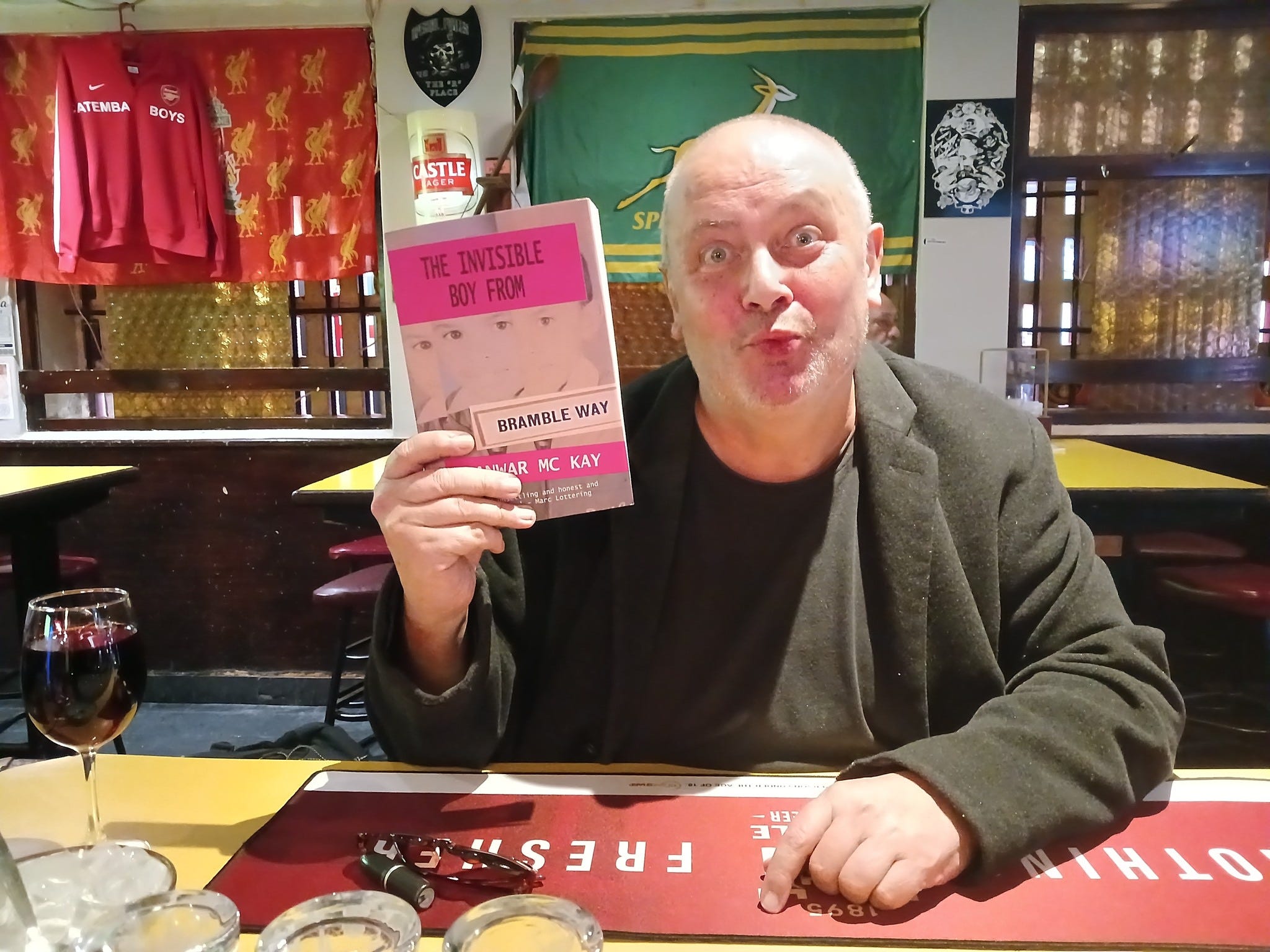
Reading Anwar McKay’s new autobiography, “The Invisible Boy from Bramble Way,” jolted that memory.
Marianne Thamm’s foreword nails it: “Apartheid officials often cynically gave these bleak, racially exclusive townships names that in no way reflected their true nature, like Lavender Hill or Ocean View. Brambles also have thorns.”
Exactly. Lentegeur, Bonteheuwel, cursed names stapled onto desolate places. What went through the head of the apartheid official who signed off on them? Sitting at a desk, pen in hand, thinking: Yes, let us call this wasteland Lavender Hill.
When I saw the photo of the hotel, I thought of the absurdities of that time. On a Sunday you were told to rest, because the Bible told you so.
But it was hunky-dory to knock down a neighbourhood and chase everybody to a semi-desert on the outskirts of the city.
By the way, Anwar’s book is dynamite. I have only just started, but that first chapter socks you in the gut. Buy it, read it, let it bruise you.