𝐇𝐄𝐋𝐄𝐍 𝐌𝐈𝐑𝐑𝐄𝐍 𝐖𝐄𝐄𝐏𝐒 𝐅𝐎𝐑 𝐈𝐓𝐀𝐋𝐈𝐀𝐍 𝐎𝐋𝐈𝐕𝐄𝐒
Duplicity. It annoys me. People with selective empathy.

Last week I read about Helen Mirren and her olive trees in a gushing interview published in The Times. The actor likes to be seen as a woman of conscience.
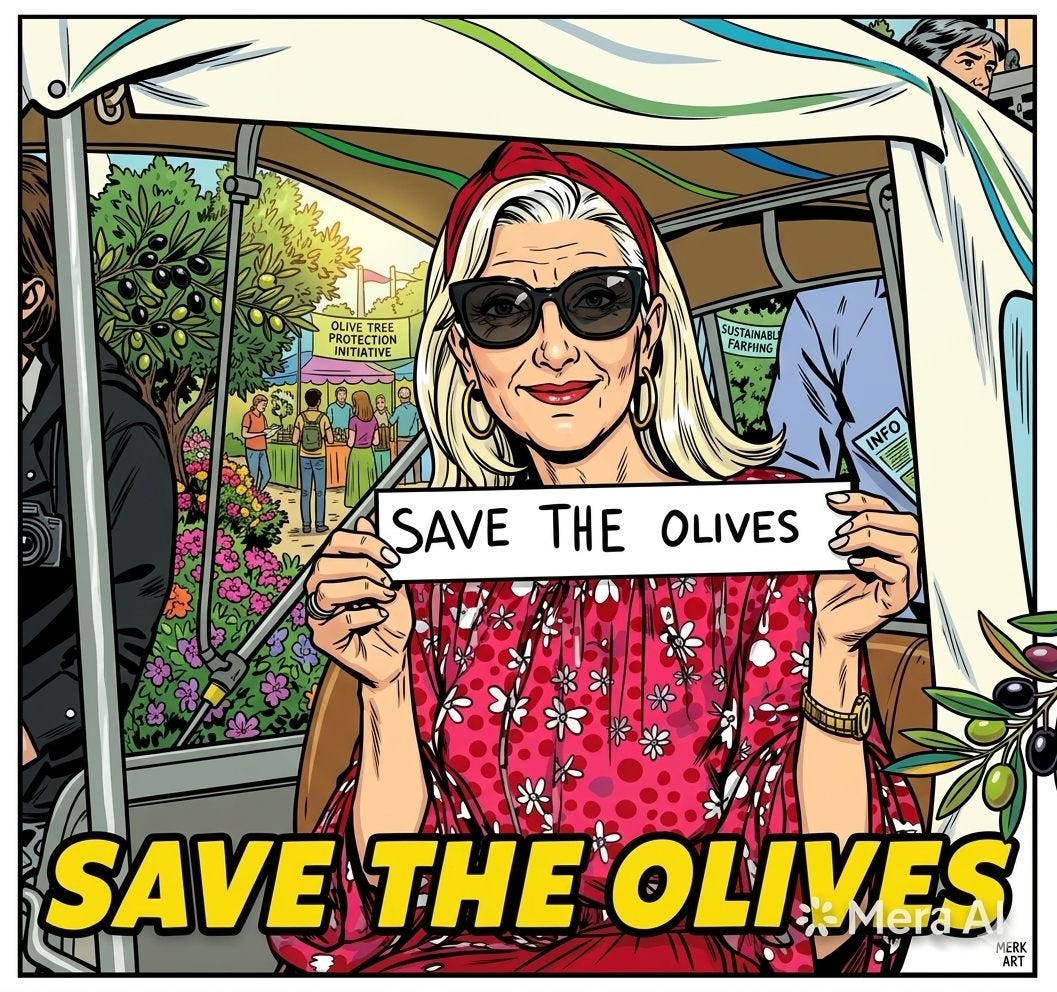
In the interview, a sloppy marketing advert really, she is full of fire and heartbreak about ancient olive trees dying in Puglia, Italy. Xylella fastidiosa, a bacterium, is wiping out entire groves.
Now she has thrown herself into “Save the Olives”, adopting 500-year-old monuments and speaking movingly about local families weeping over land their great-grandparents tilled. She calls it heritage, livelihood, living history. Fine. No problem.
But then you remember: this same Helen Mirren has long been publicly supportive of Israel. She did a kibbutz stint as a young woman. Fair enough, she was young and naïve.
Then she willingly played a sanitised Golda Meir in Golda and promoted the film as though it were sacred scripture. She said Israel must exist “for the rest of eternity”, invoking the Holocaust as a moral end point to debate.
The film itself is essentially Golda in a bunker, chain-smoking through the Yom Kippur War and carrying the burden of Zionist survival. Palestinians are barely mentioned. There is certainly no serious reckoning with the fact that Meir governed while settlement expansion continued.
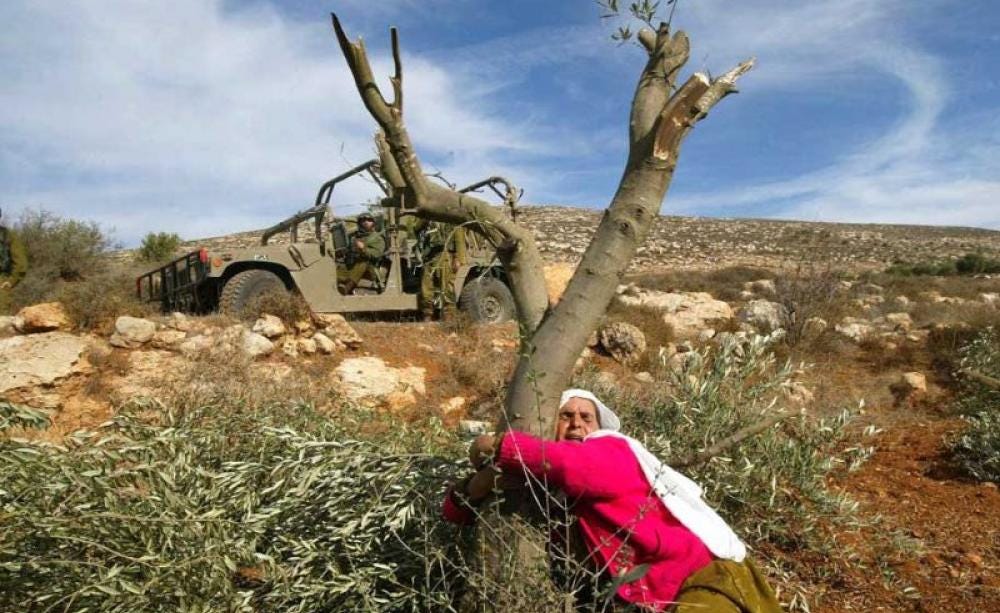
However, while she mourns Italian olives, she remains silent about Palestinian olive trees destroyed by bulldozers. Come on, Helen, show us your mettle. Surely one can hold two passions in one’s heart?
Palestinian groups and researchers say hundreds of thousands, possibly more than a million, olive trees have been destroyed since the Nakba. Many have been bulldozed, crushed or torched by settlers while the army looks the other way.
For Palestinian families, those groves mean the same as Puglia’s do to Italians. I cannot help noticing the gap. Mirren wells up for, inter alia, an Italian smallholder losing his trees to disease.
But where is that same public grief for the Palestinian farmer who loses his grove to an Israeli military bulldozer? Many Palestinian olive trees are ancient too, hundreds of years old.
If you are going to weep for olive trees in Italy, you do not get to look away when they are burning in the West Bank and Gaza Strip.
totally! Thank you for spelling it out Herman