𝗕𝗘𝗙𝗢𝗥𝗘 𝗧𝗛𝗘 𝗪𝗔𝗧𝗘𝗥𝗙𝗥𝗢𝗡𝗧, 𝗧𝗛𝗘𝗥𝗘 𝗪𝗔𝗦 𝗗𝗜𝗦𝗧𝗥𝗜𝗖𝗧 𝟭: 𝗪𝗛𝗘𝗥𝗘 𝗦𝗛𝗜𝗣 𝗛𝗢𝗥𝗡𝗦 𝗢𝗡𝗖𝗘 𝗠𝗔𝗥𝗞𝗘𝗗 𝗧𝗛𝗘 𝗗𝗔𝗬
There was a time when neighbours knew your name. The old District 1, where the Vasco da Gama Tavern is situated, was an intimate space long before it became a backdrop for gentrification.

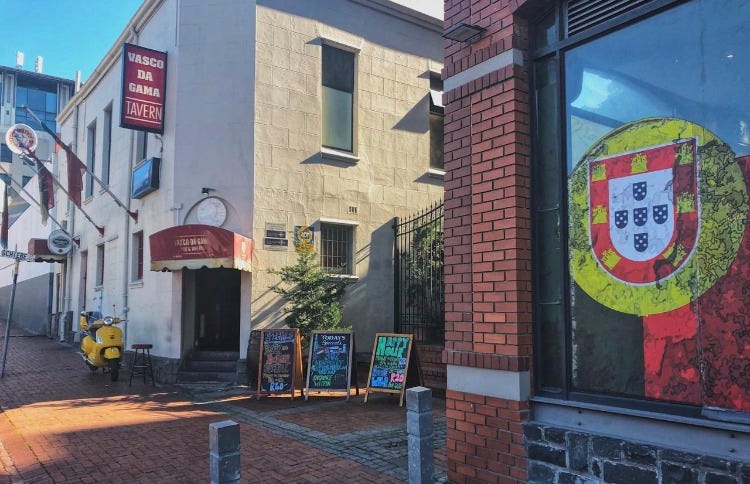
I’ve been thinking about the area around the Vasco da Gama Taverna in Green Point, and I remember it around the mid-1960s as a vibrant community with cottages, houses with balconies and working-class people everywhere, the sounds of choo-choo trains, ships blasting their horns as they sailed into the harbour, children playing in the streets. Slowly, of course, it became gentrified.
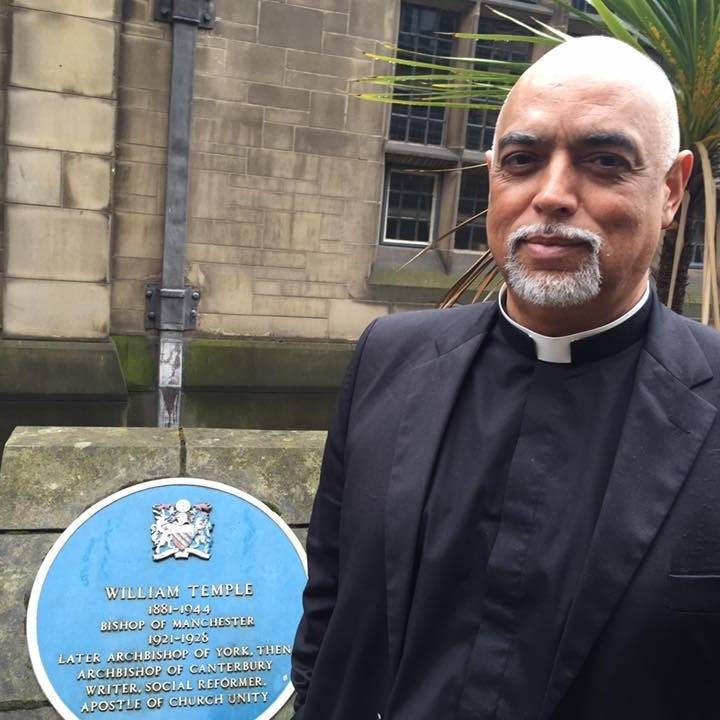
Quite a while back, I discovered Michael Weeder’s fascinating account of District 1 (the area around the Vasco) in his thesis, “The Palaces of Memory”. Weeder, an Anglican priest who served as Dean of St George’s Cathedral in Cape Town from 2011 until his retirement in 2024, wrote this in 2006 as part of his Master’s in Public and Visual History.
I’ve read it twice, and it has all the ingredients for a novel, a documentary or a film. So many South African stories to tell, so little time.
For Weeder, the story was deeply personal: his own family had lived there for generations, with roots extending beyond slavery. He grew up hearing stories from his grandmother on Ebenezer Road and his mother, Sarah Francis Weeder, who brought him “home” to Amsterdam Street.
His thesis weaves in family photos: on the stoep of 10 Amsterdam Street, or his grandmother’s arm holding a young relative, alongside neighbours like the Mancini family, newly arrived from Italy.
District 1, also called De Waterkant, was a working dockland area, bounded by Somerset Road to the south, Duncan Docks to the west, and streets like Amsterdam, Prestwich, Ebenezer and Alfred. They’re all still there, silent witnesses to the past.
Weeder writes that in the early to mid-20th century, before the Group Areas Act in the 1960s, it was home to a mix of people: descendants of slaves and Free Blacks, alongside immigrants from Italy, Portugal, Germany and elsewhere. There is also a little side-street called Schiebe Street, clearly of German origin, I wonder who Schiebe was.
Families like the Mancinis lived next to Jewish shopkeepers, Portuguese grocers and “coloured” railway workers. Many worked at the docks or for the South African Railways and Harbours.
Life involved shared routines: children playing in alleys, men returning from shifts, women chatting on stoeps. Overcrowding was common, with shared bathrooms for several families. I remember them too, along with the man who later ran the car wash, a large guy called Spikkels Moore.
Houses were simple: double-storey tenements along Amsterdam and nearby streets, or galvanised-iron “tin pots” for railway employees near Prestwich Street. These were often multigenerational homes with stoeps for gatherings. Stables for horse carts stood nearby, adding to its working character.
Weeder’s thesis describes businesses that supported the docks: six grocery stores in the small area, run by Jewish, Portuguese or Muslim owners. Warehouses like CTC coffee, Irvin & Johnson and wine stores filled blocks. A German butcher, the Traffic Department and a whites-only nightclub called Navigator’s Den were part of the mix. Trains at Ebenezer Road Station and carts hauling goods kept the area busy.
I recall some “coloured” and Muslim families taking German surnames because German men had fathered children in those communities. God knows what the government said, I think in so-called “grey areas” they looked the other way. For a while.
Incidentally, the building that houses the Vasco da Gama Taverna was built in 1890 from rocks retrieved from a nearby old quarry (now part of Strand Street). It was a hotel before the pub opened in 1972, probably catering to sailors and their companions.
The building where Il Leone Mastrantonio (Italian restaurant) stands today was a large boarding house when I was young (not yet ten), and remained part of a row of boarding houses or digs until the area became fully gentrified around the time the V&A Waterfront was developed. Behind it were many other small boarding houses, today all businesses. The political cartoonist Zapiro stayed in one of these houses when he was young.
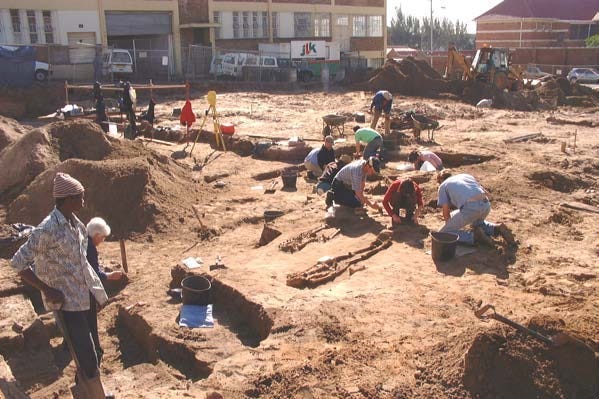
The area grew from 19th-century slave estates and burial grounds, including Khoi sites in Cobern Street and extensive slave graves at Prestwich Street. In 2003, during construction, hundreds of skeletons, mostly of enslaved people and others buried informally, were uncovered, a stark reminder of the layers of history beneath the streets. Many of the older buildings standing there today are built over old graves.
And then the whole spirit of the place was destroyed. The Group Areas Act cleared the community, expropriating homes in circa 1967 and demolishing them in the 1970s for commercial use. Families, including Weeder’s own, were moved to suburbs like Bridgetown or Elsies River, where fences replaced open streets.
Weeder calls it a “place of continued absence”, but memories persist through stories and photos, linking personal history to the city’s past. That’s why I’m mentioning his thesis now, to keep the streets of our city alive with the past.
PS: For access to his thesis: https://uwcscholar.uwc.ac.za/.../266989c9-12ef-405c-bec2...
It still goes on, only thing that altered is they stopped calling it
along racial terms and now it's class, the rich buy everything, demolish it and build gated private resorts, only way you get in is to call them Mister and deliver goods, drive alom
Drive along any stretch of beach with eyes open,
Animals are locked away, pay R5000.00 a nite and you to can view them.
Rates and taxes increase, fall behind and you on the street, look again and your house is a holiday resort.
The Roman's left a blue print
Hail Caesar !!!