𝗪𝗛𝗘𝗡 𝗧𝗛𝗘 𝗟𝗜𝗚𝗛𝗧 𝗕𝗘𝗚𝗜𝗡𝗦 𝗧𝗢 𝗟𝗘𝗔𝗩𝗘
When it sometimes grows dark inside me, I find myself thinking about loss and, strangely, about light.

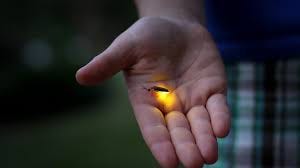
I go back to childhood, to a time when, at night, I could see the tiny lamps of fireflies burning on the slopes of Signal Hill in Cape Town. There was a time when you could braai on top of the hill.
They were everywhere. As the summer sun slipped behind the mountain, that side of the hill would suddenly come alive, lit as though someone had cast a magician’s spell across it. Those lights have long since gone. Many insects are gone too, likely forever.
On warm nights in Cape Town, especially near the lower slopes in Tamboerskloof, there used to be a whole choir of crickets. Their chirring rose in the dark and echoed against the mountain, a soundtrack to summer evenings when nature still seemed close enough to touch. It was a time of insect song and veld sounds, when one could still feel the world brush against the skin.
Once in Churchhaven, I woke up at night, my window was open, and I could look up at the sky and saw the milky way. I heard the veld animals of the night making sounds. There was a strange little rascal with big eyes on its back feet and it peeped into my window. I felt grief. What has become of my life in the city? I do not yearn to move to the platteland; I am too much of a city person. It comes at a price.
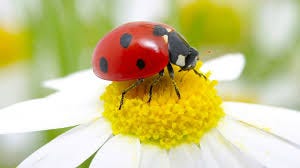
What became of the ladybirds? There were so many once. You would sit on the stoep and one would land lightly on your hand, red and black and miraculous. You made a wish. That was the contract.
There is still the odd praying mantis, buy they, too, are fewer. They have become strangers. Chameleon once flourished in the garden bushes. They belonged to my childhood in the same way scraped knees, tamatiebredie and melktert did. Now perhaps one survives here and there, a stubborn little prehistoric relic clinging to some suburban hedge.
In Sea Point there were once swarms of screaming seagulls, white and noisy and permanently offended by something. The few that remain now are no more than flecks in the sky, punctuation marks against the Atlantic. Residents now complain on social media about how loud they are. Really? You should have heard them back in the day, they were loud you didn’t need an alarm clock.
At Three Anchor Bay you used to smell salt and bamboo. Today, on a hot day, a greasy, faintly obscene stench of sewage hangs over Mouille Point, drifting past the millionaire apartments with their sealed windows and curated views. Wealth, as it turns out, is no defence against the smell of a city’s neglect.
The expelled sushi and smoked salmon from last night, served on thin china plates with hand-painted botanical illustrations percolate the next afternoon in a sweltering ocean, stained with faeces.
Even the mornings have changed. Not so long ago, the city woke to birdsong, a joyful racket of chirps and whistles, calling the light in. Now it is mostly the hadedas, and one must admit they were not exactly first in the queue when the Lord handed out singing voices.
Cape winters had a different temperament. The rain used to arrive as a fine, persistent drizzle, a soft grey veil that could hang over the city for days. In the mornings there were banks of mist that only lifted late, leaving the mountain half imagined until nearly noon.
And the stars. Once, in Cape Town, you could see them in abundance. The night sky had depth. Now some of the lights move. Satellites drift across the darkness, along with all the glittering debris of our species’ ambitions, adrift in outer space. The are heavens are colonised and cluttered by men with rolling drug-fuelled eyes.
On long journeys through the Karoo, insects once flew into the windscreen in such numbers that one had to stop and clean the glass. Where are they now?
People from across the country tell me the tok-tokkie beetles have disappeared. I used to hear them on the slopes of Table Mountain. Termites are missing in action.
In summer, usually in February, shiny snaked with reckless tongues and twinly eyes would slither discreetly down Signal Hill into homes in Green Point and surrounds. Some still do, but hardly.
Years ago, when they still often popped into homes, a woman in Green Point whom we knew phoned her son screaming there was a snake in her cupboard. If you find one now, it’s in the newspapers the next day. Back then they were part of the general fauna and flora.
Frogs no longer croak; they turned every wet evening into an orchestra pit. I once visited a friend in Woodstock with a pond, and there I heard them. It made me sad, that they are reduced to singing in private gardens. The berg winds seem fewer. The colourful butterflies that used to arrive before the rain, and the winged ants that followed them, have vanished into memory.
Even the sea glows less. There is less phosphorescence in the breakers now as the plankton has thinned. Nights at the ocean’s edge used to carry that spectral shimmer, a kind of underwater starlight, and now it is fainter, as though the sea is tired. It has run its course like an elderly person on their death bed begging for release.
I often think of that line, paraphrased from Little Fluffy Clouds by The Orb, where the child asks her mother: “What was the sky like when you were young?”
And the answer: “The sky always had little fluffy clouds up there, long and bright. There were so many stars at night. The sunsets burned purple and red and yellow, the clouds catching fire in every direction.”
As a child, she says, she watched them all the time. Perhaps that is what growing older in a city means: not only remembering what has gone, but noticing what has stopped living.
The fireflies first. Then the crickets. Then the frogs, the butterflies, the stars. Loss leaves in instalments, in absences so small that one scarcely registers them until one day the night is a stranger.
Yet memory, stubborn thing that it is, keeps its own small lights alive.
Some evenings, when the mountain is a black shape against the last of the sky, I can still almost see those fireflies burning on Vlaeberg, tiny lamps in the dark, refusing to go out entirely. Perhaps that is what memory is for: to hold the light a little longer after the world has dimmed.

Dis so mooi geskryf - dis alles net te 'sad'
Strange how mosquitos seem to have moved in though
I don't remember so many from my childhood